Recharge & Billing
This scenario helps users distinguish account top-ups, resource quota, resource usage, and model billing and select the correct view for checking whether credits arrived, whether capacity is usable, and why deductions occurred.
Applicable Roles
- End User reviewing top-ups, quota, usage, and charges
- Model Provider reviewing model usage and revenue
- Platform Operator reconciling quota, credits, metering, and billing periods
Four Concepts
| Concept | Question | Entry |
|---|---|---|
| Top-up orders | Did the account receive new spendable credits? | Top-Up Orders |
| Transactions | Why did the balance increase or decrease? | Transactions |
| Resource quota | How much compute or storage can the tenant request? | Resource Quotas |
| Resource usage | How much did an instance or job actually consume? | Resource Usage |
| Model usage and earnings | How many tokens, calls, duration, charges, or earnings did model calls produce? | Model Usage, Model Earnings |
| Monthly bill | Can summarized spending for the billing cycle be reconciled? | Monthly Bill |
Target Outcome
- The user confirms top-up history and updated spendable credits.
- The user distinguishes insufficient resource quota from insufficient balance or credits.
- Resource or model consumption can be traced to an instance, job, or call.
- Operators can explain deductions with details and billing-period summaries.
Before You Start
- Decide whether the issue concerns model calls or On-Prem resources.
- Confirm tenant, account, time range, billing period, and unit.
- Prepare a redacted top-up, instance, job, or call identifier.
Procedure
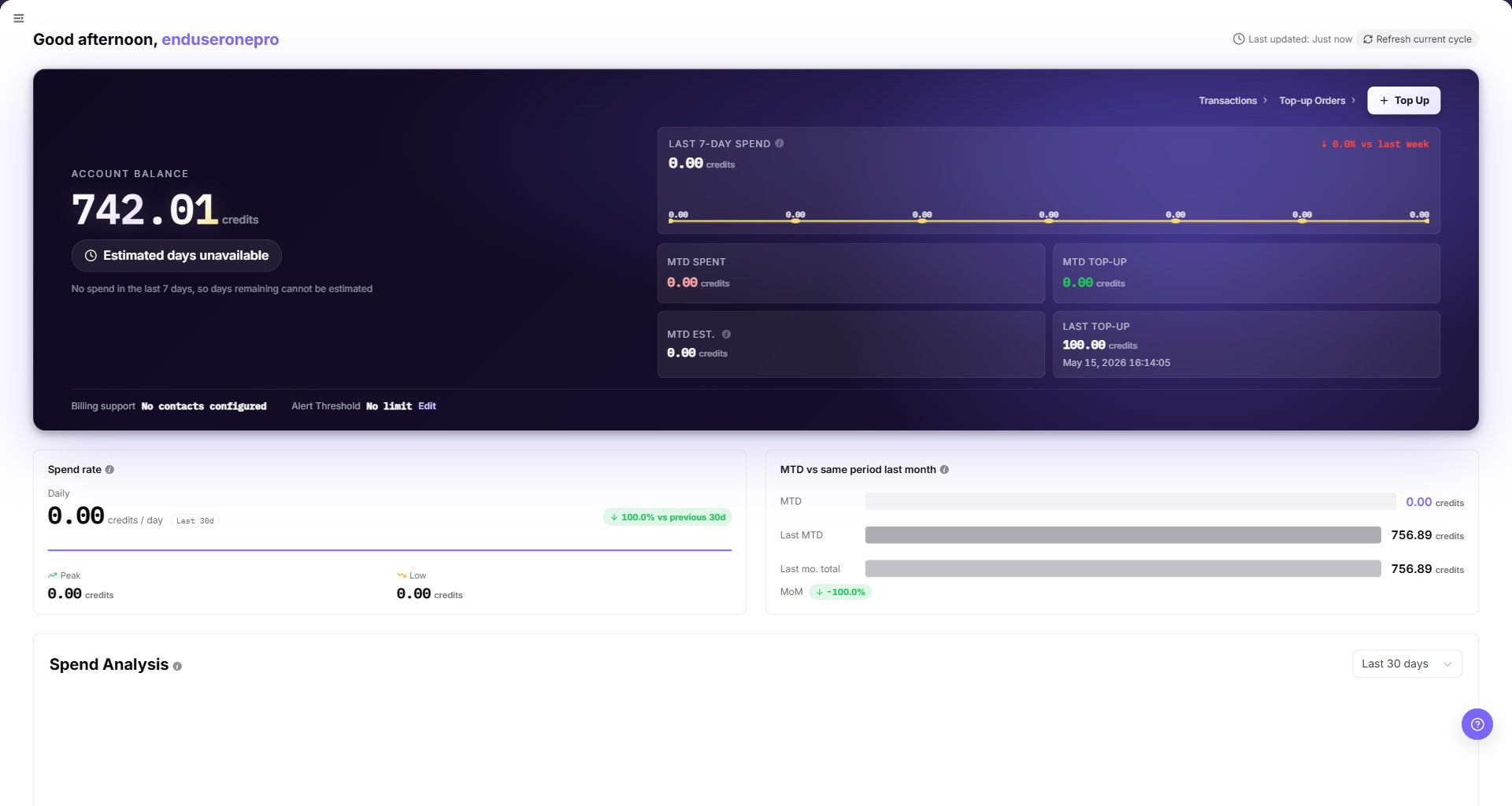
- Open Billing Overview and confirm available balance, billing cycle, and alerts. Then review Top-Up Orders and check payment state and credited amount.
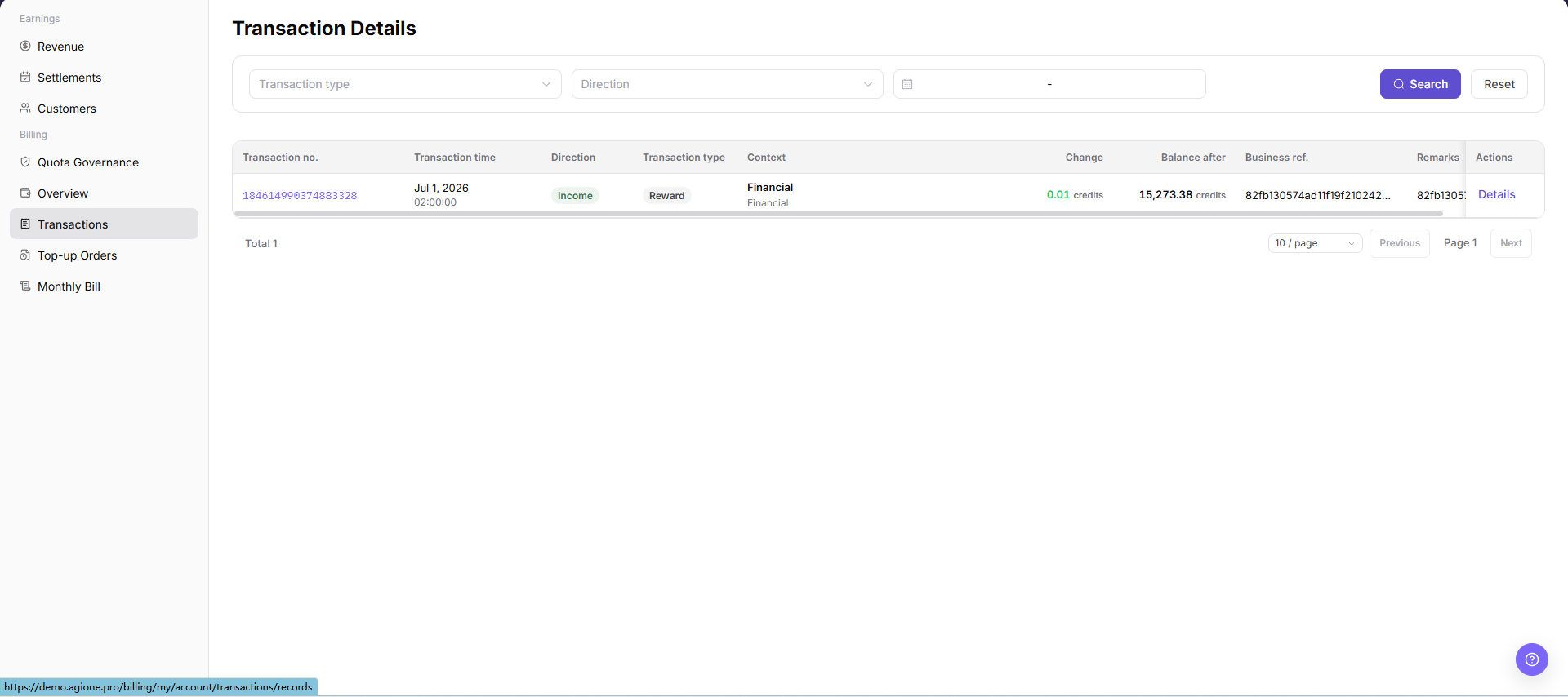
- Open Transactions and explain increases, deductions, or adjustments for the same account and time range.
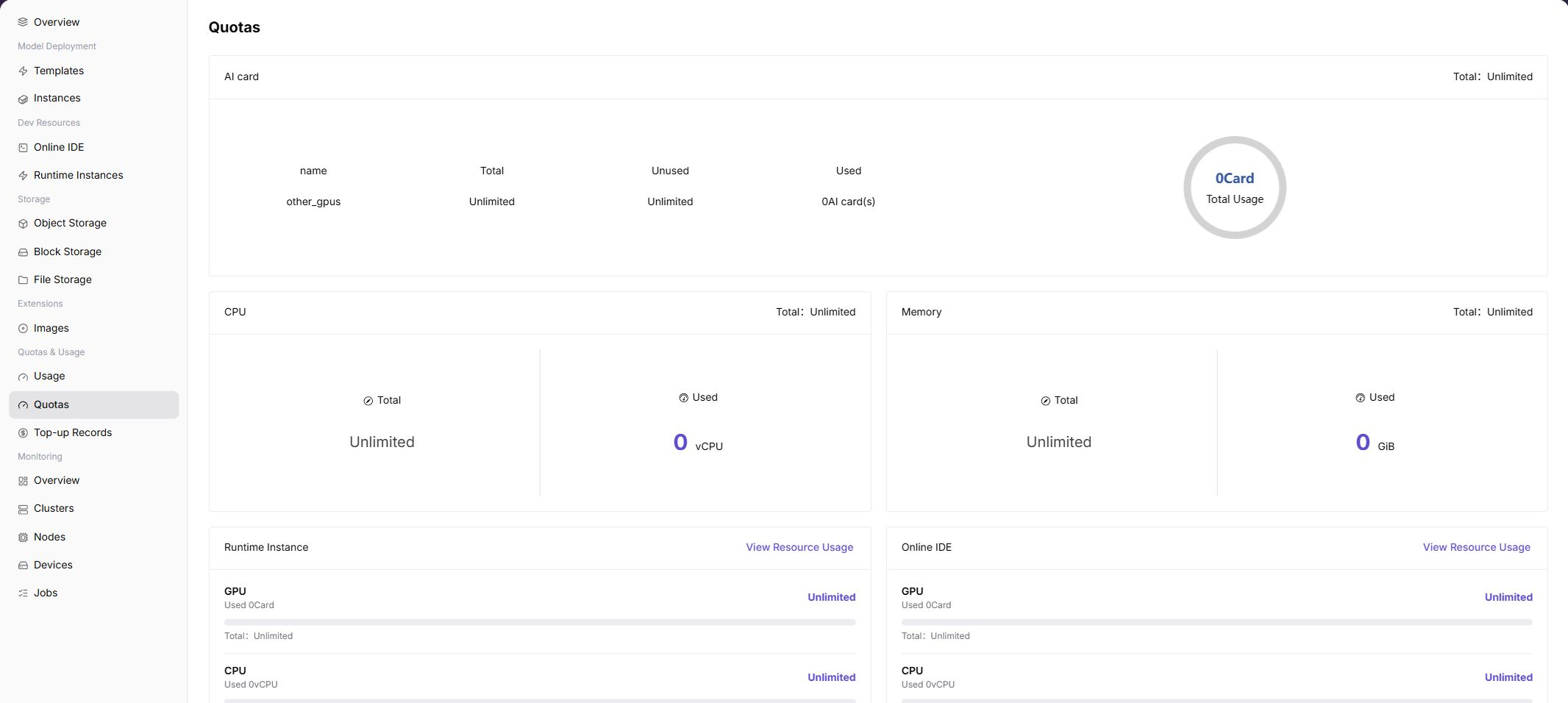
- Review Resource Quotas or Quota Governance and confirm that limits and remaining values cover the target workload.
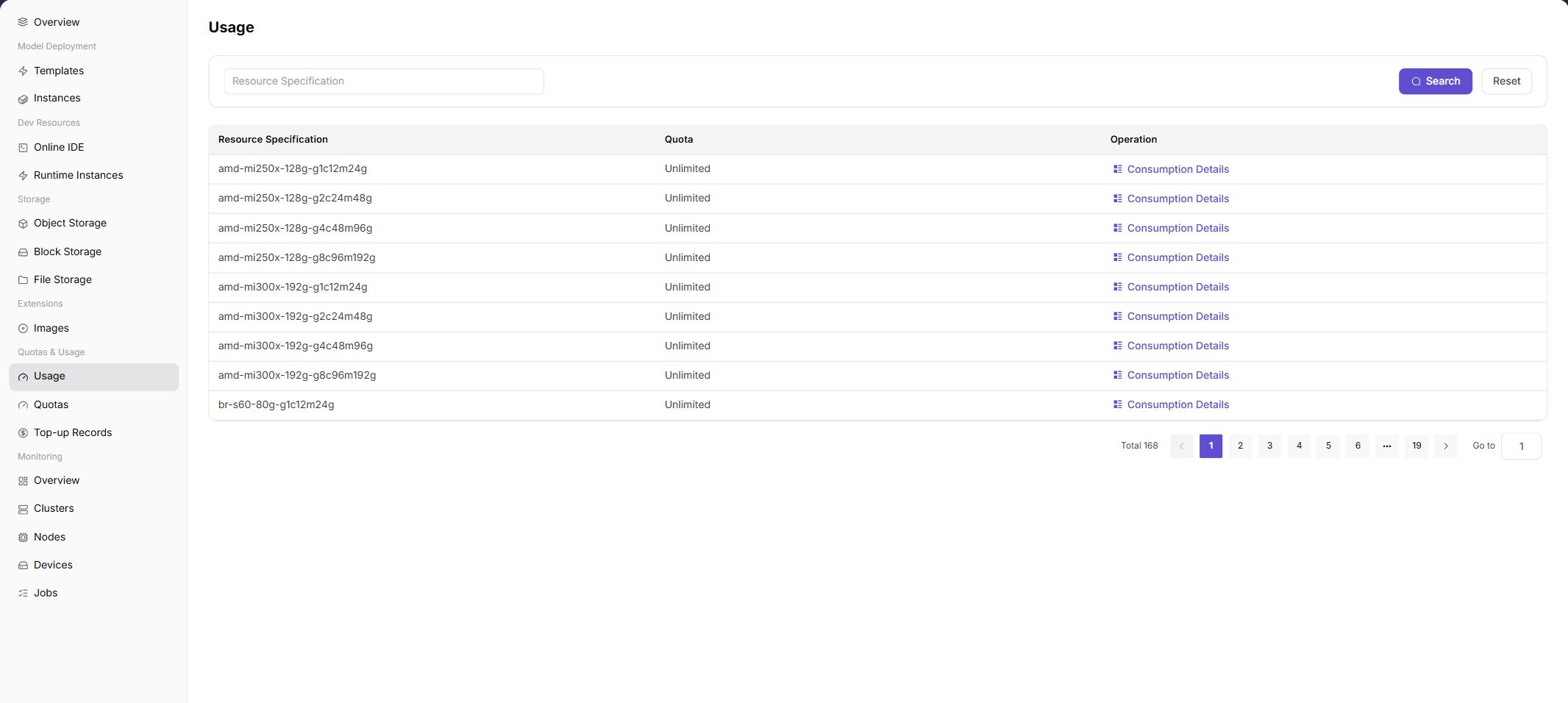
- For On-Prem resources, compare instance state with Resource Usage and operator metering details.
- For models, compare call logs, model usage, and model revenue.
- Open Monthly Bill and reconcile currency, billing unit, price, transactions, and summarized deductions in the same cycle.
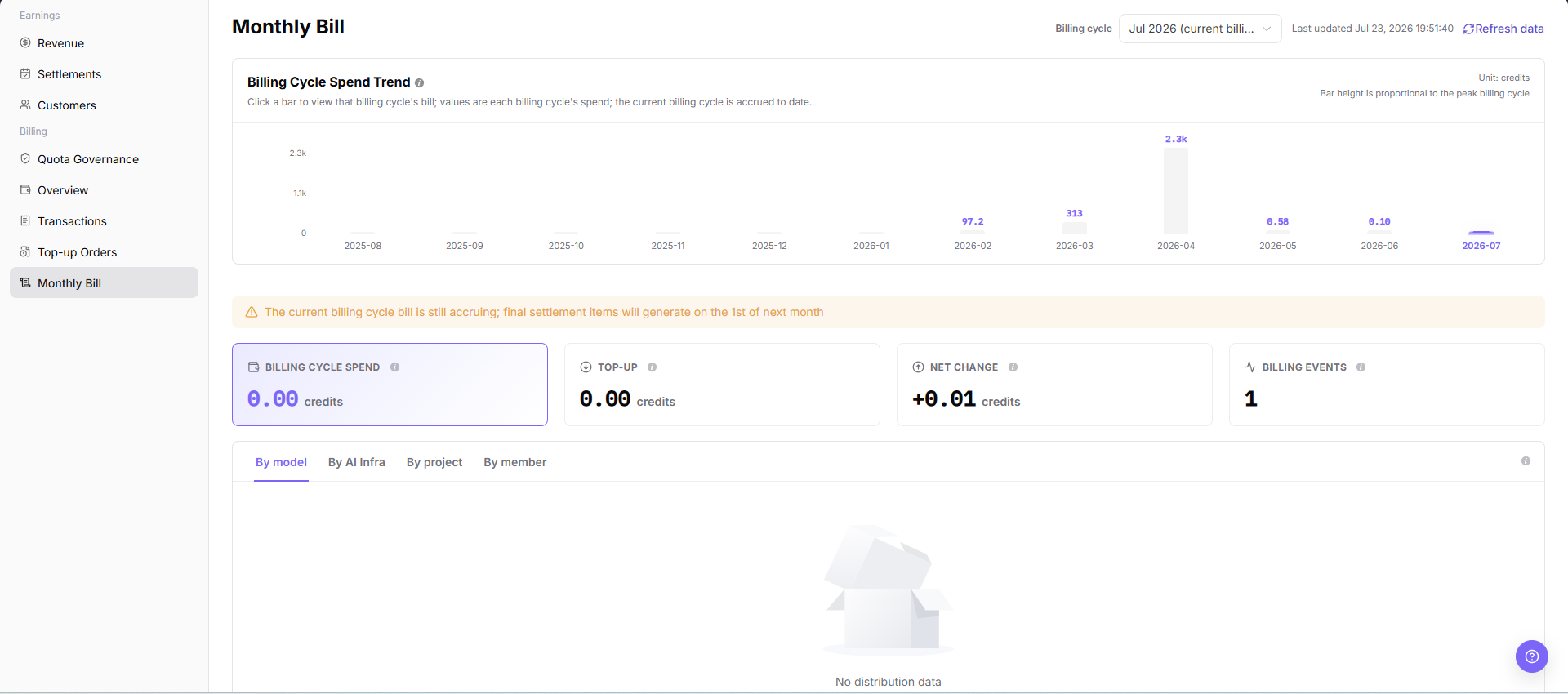
- If operator assistance is required, provide tenant, billing cycle, object ID, and redacted evidence. Operators continue with Billing-Cycle Reconciliation and Settlement.
Operator references: Metering Details and Monthly Usage.
Completion Checklist
Purpose: These are the exit criteria for the current feature task. Use them to decide whether the result is observable and reviewable and whether you can continue to the next step in the scenario. They do not repeat the procedure; if any item fails, follow the troubleshooting section below.
| Check | Pass Criteria |
|---|---|
| 1 | Top-up order, transactions, account credit, and event time agree. |
| 2 | Resource quota covers the target flavor and credits cover expected consumption. |
| 3 | Deductions map to a specific instance, job, or model call. |
| 4 | Billing unit, price, currency, transactions, and monthly bill are consistent. |
| 5 | Anomaly notes include a reproducible time range and object ID. |
Troubleshooting
| Symptom | Check First |
|---|---|
| Top-up exists but creation still fails | Resource quota, flavor capacity, template scope, and account credits |
| Balance is sufficient but model calls fail | Model grant, personal key, rate limit, and model state |
| Stopped instance still incurs usage | Metering end time, residual job, and state synchronization |
| Amount differs from expectation | Billing mode, unit, effective price time, currency, and period |
| User and operator views differ | Tenant, time range, aggregation level, and synchronization delay |
| Credit conversion does not match the expected amount | Current currency setting, the operator-configured default credit exchange rate, model pricing rule, token or resource usage, and effective time |